Técnicas Plásticas: 14 Years Training Mexico's Injection Molding Industry
In the plastic injection molding industry, the gap between available technology and personnel capable of operating it efficiently represents one of the greatest challenges for Latin American companies. Técnicas Plásticas, led by Engineer Manuel Ordóñez, has spent 14 years closing that gap in Mexico and expanding throughout Latin America. This is their story: the challenges, the methods, the measurable results, and the lessons learned over more than a decade training world-class operators, technicians, and supervisors.
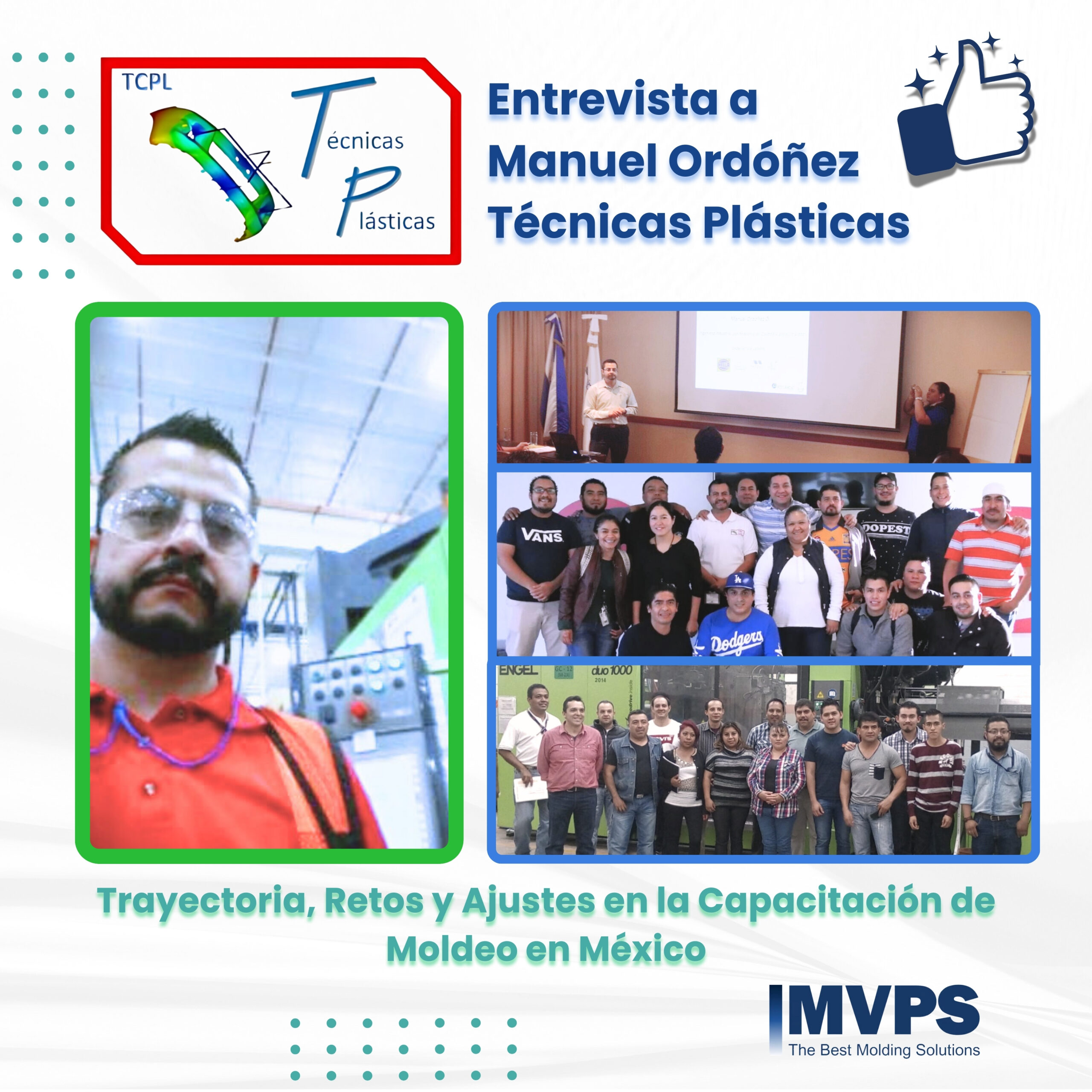
Técnicas Plásticas: 14 Years Training the Industry
Técnicas Plásticas was born from a genuine passion for the plastics and manufacturing industry. Engineer Manuel Ordóñez, with years of hands-on experience in production plants, identified a recurring pattern he found unsustainable: state-of-the-art machinery operated by personnel without adequate technical training.
That combination—advanced technology, insufficient knowledge—produces devastating consequences for any company: high scrap rates, unscheduled downtime, inefficient production cycles, and a culture of "firefighting" rather than problem prevention. Ordóñez's vision was clear from the start: create a training company that is accessible, current, and delivers real impact on productivity.
Today, 14 years later, Técnicas Plásticas is a benchmark in Mexico and operates in multiple Latin American countries, having trained thousands of professionals at every level of the production chain.
Key facts about Técnicas Plásticas:
- Founded in: Mexico City
- Track record: 14 years in the market
- Contact: Ing. Manuel Ordóñez
- Website: mistecnicasplasticas.com.mx
- Coverage: Mexico and Latin America
The Training Problem in Mexico's Injection Molding Industry
To understand why Técnicas Plásticas exists and why it has grown consistently for 14 years, we need to understand the structural problem facing the injection molding industry in Mexico.
The Mexican plastics industry has experienced remarkable growth driven by demanding sectors such as automotive, appliances, and packaging. Investment in advanced technology has increased significantly, and environmental pressure has accelerated the transition toward recyclable and biodegradable plastics. All of this raises the demand for highly qualified personnel.
However, the reality on the shop floor tells a different story:
- Operators without formal technical training handling multi-million-peso equipment
- Outdated or nonexistent training materials
- Technicians who learned "on the job" without structured methodology
- Supervisors lacking tools to diagnose process problems
- High personnel turnover requiring constant retraining from scratch
This situation is not exclusive to small companies. Large plants with international certifications suffer the same problems when investment in machinery is not matched by proportional investment in human training.
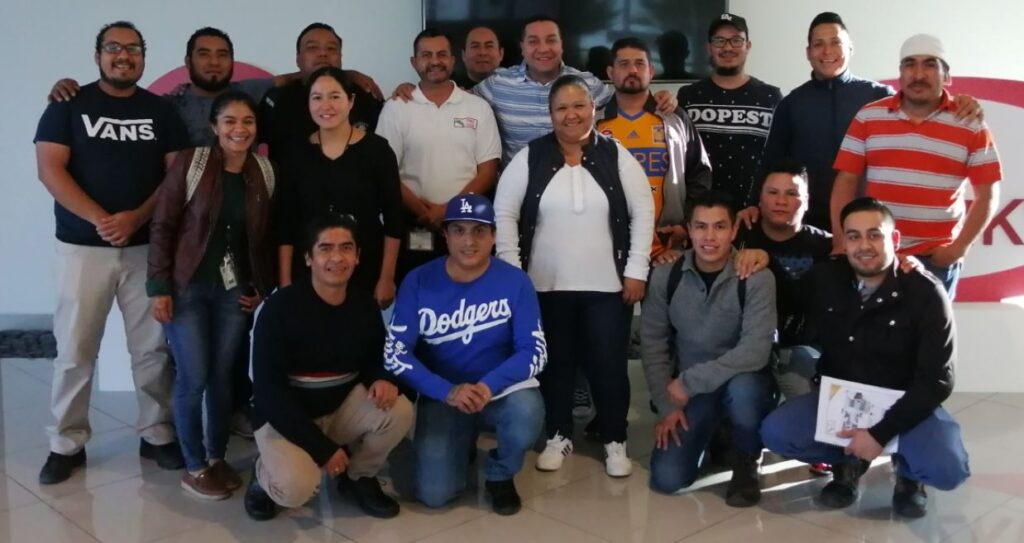
Ordóñez's diagnosis was precise: it is not a matter of lack of talent, but lack of access to specialized, updated training. Técnicas Plásticas was created to solve exactly that problem.
Training Programs: Operators, Technicians, and Supervisors
From its founding, Técnicas Plásticas developed a structured training offering at three levels, each designed for the specific needs of a role within the plant:
Level 1: Injection Molding for Beginners
Aimed at new operators or those with empirical experience but no formal training. Core topics include:
- Basic machine operation: Fundamental parameters, injection cycle, safety
- Parameter adjustment: Temperature, pressure, speed, cooling time
- Preventive maintenance: Basic routines to extend equipment life
- Common defect identification: Flash, sink marks, burn marks, warping
Level 2: Fault Detection and Correction
Aimed at technicians and experienced operators who need to develop diagnostic capabilities:
- Systematic troubleshooting methodology
- Root cause analysis of defects
- Relationship between process parameters and product quality
- Scrap reduction through precise technical adjustments
Level 3: Custom Programs
"Turnkey" solutions for companies requiring personalized intervention:
- Prior diagnosis of the plant's specific needs
- Tailored program design for the company's equipment, materials, and processes
- Training at all levels: From operators to supervisors and managers
- Post-training follow-up with impact metrics
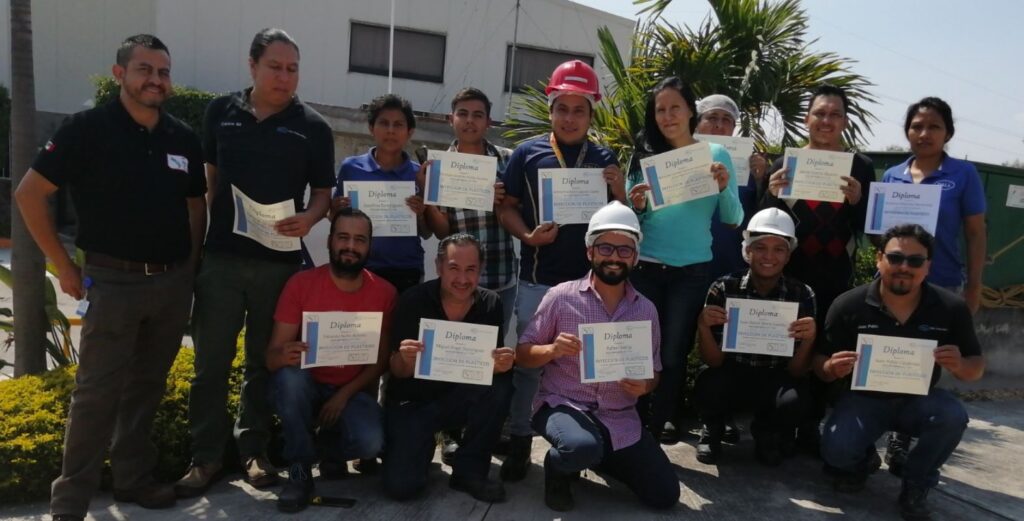
All programs were designed from the beginning with one guiding principle: the impact must be immediate and measurable in productivity. Not theoretical courses disconnected from shop floor reality, but applied training that participants can implement the day after completing the course.
Practical Teaching Methodology
One of the most important differentiators of Técnicas Plásticas is its teaching methodology, which prioritizes practice over theory without sacrificing technical rigor.
Prior Diagnosis
Before designing any program, the Técnicas Plásticas team conducts a needs assessment of the specific client, including plant visits, interviews with operators and supervisors, review of available equipment, and identification of the main quality and productivity problems.
Training in Real Facilities
Whenever possible, training is conducted directly at the client's facilities, working with their own machines, molds, and materials. This eliminates the gap between learning and application.
Continuous Curriculum Updates
The curriculum is regularly updated to incorporate advances in Industry 4.0, automation, and sustainability. Ordóñez and his team actively participate in industry conferences and maintain partnerships with technology providers and universities.
E-learning Platforms
Alongside in-person training, Técnicas Plásticas has developed digital resources and e-learning platforms to reinforce learning and train personnel at remote locations.
Soft Skills Development
Técnicas Plásticas explicitly integrates into its programs: teamwork, effective communication between shifts, operational leadership for supervisors, and conflict resolution under production pressure.
Measurable Results: Scrap Reduction and Efficiency
The credibility of any training program is ultimately measured by the results it generates in the plant. Técnicas Plásticas has documented consistent improvements in the companies where it has intervened:
| Indicator | Average Improvement | Operational Impact |
|---|---|---|
| Scrap and defect reduction | 30% | Direct savings in material and reprocessing |
| Cycle efficiency improvement | 15% | Higher production volume with same investment |
| Unscheduled downtime reduction | Variable | Lower corrective maintenance cost |
| Personnel retention | Significant improvement | Lower recruitment and retraining cost |
| Team autonomy | High | Less dependence on external support |
A 30% reduction in scrap is an extraordinary result from a financial perspective. For a plant generating 10 tons of scrap per month at a material cost of $30 MXN/kg, that reduction represents a savings of $90,000 MXN per month—more than $1,000,000 MXN annually—derived solely from improvements in personnel knowledge and practice.
The 15% efficiency improvement translates into more parts produced per hour with the same machinery, directly improving the operating margin without requiring additional investment in equipment.
Industry 4.0 and Automation in Training
One of the greatest challenges facing any industrial training company today is the speed of technological change. Automation, artificial intelligence, IoT applied to manufacturing, and digital twins are radically transforming how injection molding plants operate.
Técnicas Plásticas has adopted an active stance toward this challenge, including demystifying AI in the injection molding context—helping operators and technicians see it as a tool that amplifies their capabilities rather than a threat to their jobs.
The training programs progressively incorporate content related to sensor-monitored process parameters, SCADA systems applied to injection molding, predictive maintenance based on data, and software-assisted parameter optimization.
DC-3 Certifications and Educational Partnerships
An important differentiator for Técnicas Plásticas is its ability to issue the DC-3 certification, the official document in Mexico validating that a worker has received training in specific competencies. This certification has legal validity before the Ministry of Labor and Social Welfare (STPS), strengthens the worker's professional record, and can be required in quality audits and ISO certification processes.
Técnicas Plásticas also maintains an active relationship with technical schools and universities, creating a virtuous cycle where students access practical training aligned with real market needs and companies find graduates with applicable knowledge from day one.
Adapting to Different Equipment and Materials
Técnicas Plásticas works with companies of all sizes and sectors. Large corporations with standardized processes require adapting training to existing protocols without disrupting operations. SMEs and family businesses require more comprehensive, practical training since the same technician often operates the machine, changes the mold, adjusts parameters, and performs preventive maintenance.
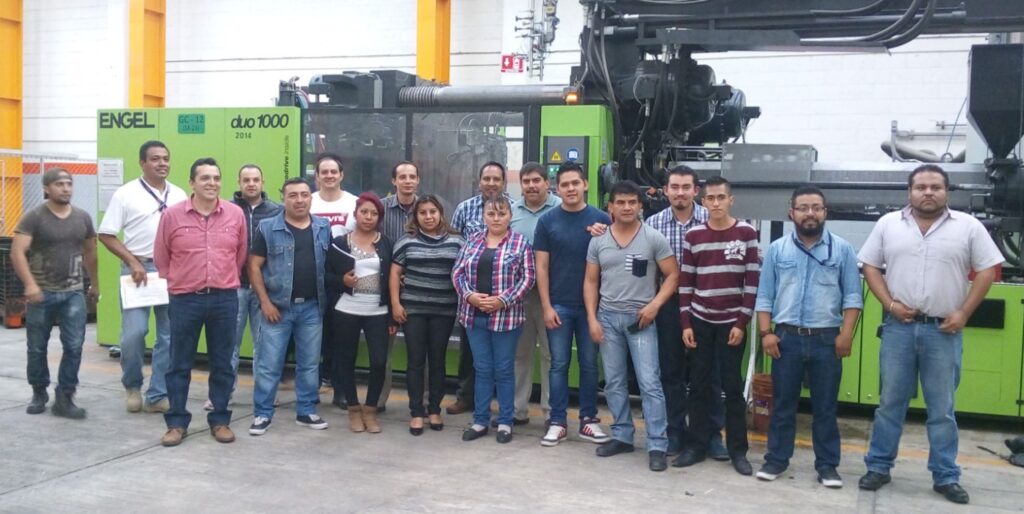
The plants visited operate machines of very diverse brands and generations—from older equipment with analog controls to the latest-generation machinery with IoT connectivity. The training adapts to the real capabilities of the available equipment, always prioritizing the transfer of principles the operator can apply regardless of the machine brand or model.
Expansion to Latin America
Técnicas Plásticas has transcended Mexico's borders and operates in multiple Latin American countries. Training delivered in El Salvador is representative of this regional expansion.
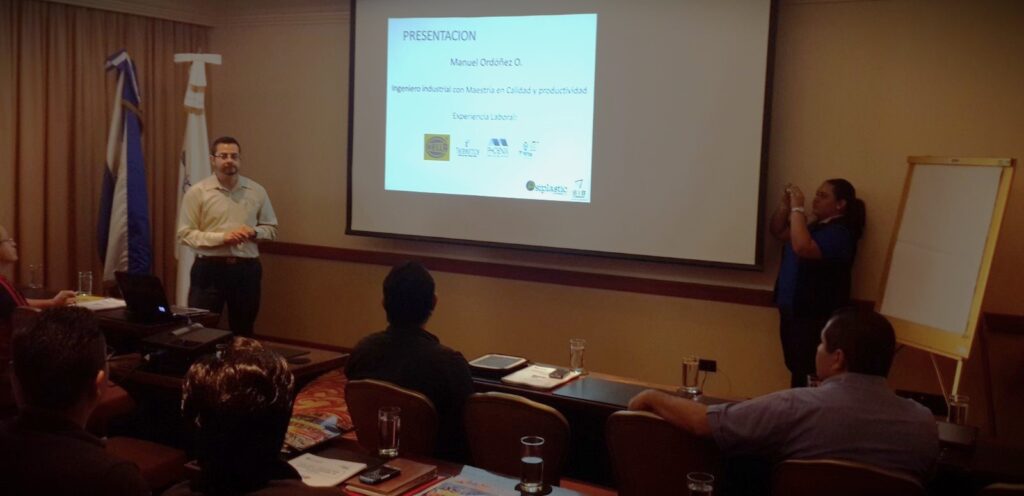
This expansion has required important adaptations: logistical challenges from frequent travel, cultural adaptation since each country and company has its own organizational culture, and adjusting not only the content but the pedagogical style, pace, examples, and technical language to each context.
In all cities and countries visited, Ordóñez observes a common pattern: the industry is growing, adopting more advanced technology, and developing greater awareness of the importance of training.
Lessons Learned in 14 Years
Fourteen years of intensive work in the injection molding industry have yielded a wealth of learning that Ordóñez shares generously:
Ten tips for new injection molding professionals:
- Keep your curiosity active about new technologies and methods
- Develop flexibility to adapt to different work environments and rhythms
- Cultivate diagnostic skills—a good technician solves problems, not just reports them
- Prioritize communication—many process problems are communication problems between shifts
- Practice workplace empathy
- Read the manuals—the technical information you need already exists
- Stay calm under pressure—rushed decisions in production are costly
- Maintain a positive attitude—challenges are learning opportunities
- Think in terms of resource efficiency—minimizing waste is everyone's responsibility
- Enjoy the work—the plastics industry offers an extraordinary path of continuous growth
Conclusion
The story of Técnicas Plásticas is the story of a professional who identified a real need in Mexico's injection molding industry and developed a systematic, rigorous, and adaptable response to that need. Fourteen years later, the results speak for themselves: 30% scrap reductions, 15% efficiency improvements, more autonomous and committed teams, and an expansion that brings quality training to all of Latin America.
In a sector where the difference between profitability and loss can depend on tenths of a second in cycle time or percentage points in scrap rate, investment in specialized technical training is the most sustainable and difficult-to-copy competitive advantage.
Join MoldingHub: The Global Injection Molding Community
Do you work in the injection molding industry? Are you an operator, technician, supervisor, engineer, or plant manager in a plastics company? MoldingHub is your platform.
In MoldingHub you will find:
- Professionals and companies from the global plastics sector
- Specialized technical content on injection molding, materials, equipment, and processes
- Job opportunities in the global plastics industry
- AI tools specialized in solving molding problems
- Supplier directory for materials, machinery, and services
- Case studies like Técnicas Plásticas that inspire and teach
Connect with references like Ing. Manuel Ordóñez, learn from the best, and share your own knowledge with a global community of injection molding enthusiasts.
The injection molding industry advances faster when its professionals are connected, trained, and committed to excellence. MoldingHub is that space.