Machining 304 Stainless Steel to ±0.001" Tolerances: The G-INTEC Experience
In the world of precision machining, every project presents a unique learning opportunity. G-INTEC, an emerging company from the state of Sonora, Mexico, experienced this firsthand during July when they faced one of the most technically demanding challenges in their short but prolific history: manufacturing hardened 304 stainless steel components with ±0.001" tolerances for a client developing new machinery in Hermosillo.
This is the story of how strategic planning, decision-making under pressure, and an unwavering commitment to quality enabled delivery of 27 parts within the agreed 20-day deadline — without sacrificing a single thousandth of an inch of precision.
G-INTEC: A Young Company with Technical Ambition
G-INTEC (Grupo de Innovación Tecnológica) is a company with just 3 years of experience in the industrial machining market in the state of Sonora, Mexico. Although their track record is short in years, their team consists of young engineers and technicians passionate about machining and tool manufacturing, who have managed to position themselves as a quality benchmark in the region.
Their business philosophy rests on three fundamental pillars:
- Customer satisfaction as the absolute priority in every project
- Product quality without compromise, even under tight deadlines
- Technological innovation as the engine of growth and differentiation
Operating in Sonora presents particular challenges: the resources available in the region are more limited than in major industrial centers like Monterrey or Mexico City. However, G-INTEC has turned this constraint into a strength, developing creative and efficient solutions with the available means.
The company maintains an active presence on professional social networks like LinkedIn and Instagram (@g.intec.mx), where they share their projects and learnings with the Spanish-speaking machining community.
The Challenge: 304 Stainless Steel with ±0.001" Tolerances
The project in question was commissioned by a client in Hermosillo, Sonora, who was in the development phase of new machinery. The request was technically demanding from the outset:
Project specifications:
- Material: Hardened 304 stainless steel
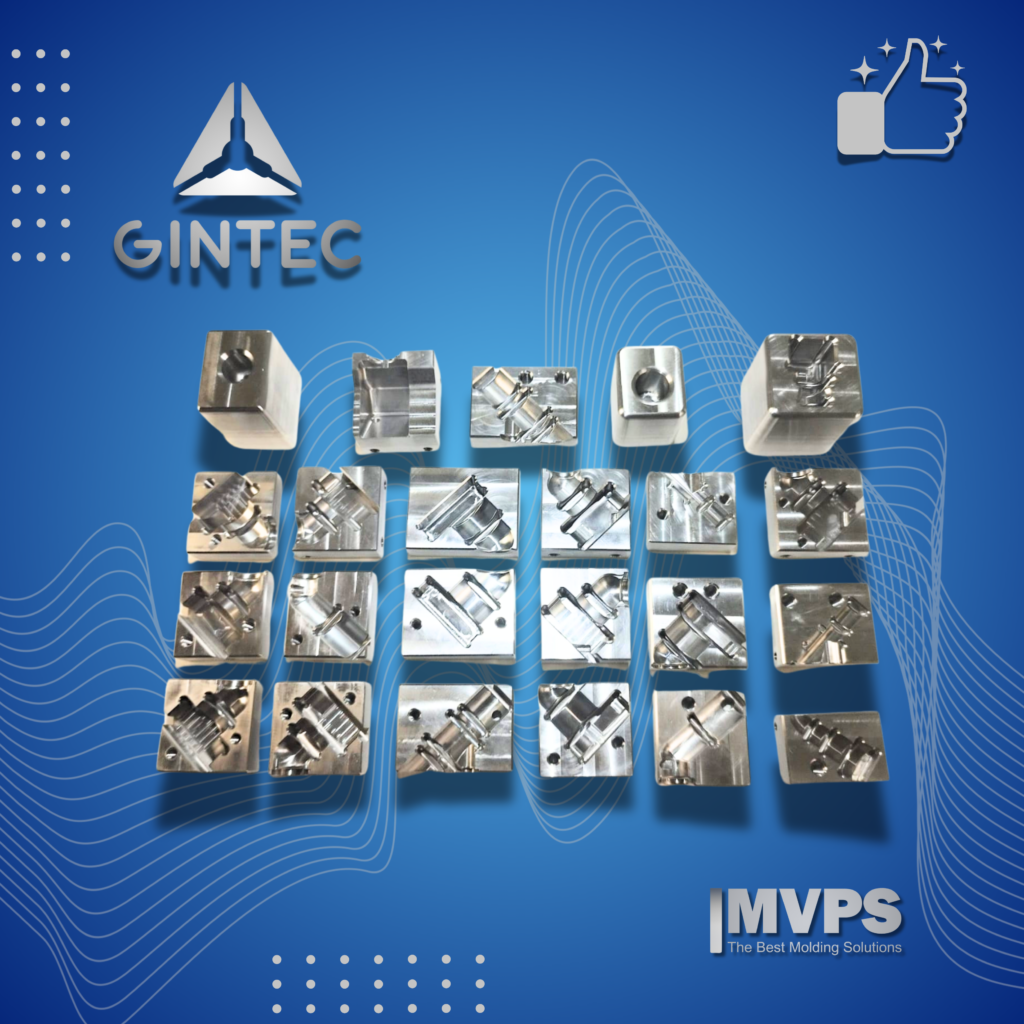
- Quantity: 27 parts with complex geometry
- Dimensional tolerances: ±0.001" (approximately ±0.025 mm)
- Surface finishes: high-precision concave
- Delivery deadline: 20 calendar days
- Required processes: contour design, complex geometries, drilling for taps and positioning pins
Luis Villegas, G-INTEC's machining center operator, described the complexity: "The parts required several complex processes, from their design with contours in geometries and concave finishes of high precision with ±0.001" tolerance, holes for taps and strategically located positioning pins."
The combination of difficult-to-machine material, extremely tight tolerances, and a non-negotiable delivery deadline created a high-pressure scenario that would test all of the team's capabilities.
Technical Characteristics of 304 Stainless Steel
304 stainless steel is one of the most widely used materials in industrial applications requiring corrosion resistance, but also one of the most challenging to machine. Its fundamental properties explain why:
| Property | Value / Characteristic |
|---|---|
| Composition | 18% Chromium, 8% Nickel, balance Fe |
| Hardness (HRB) | 80–90 HRB (annealed) |
| Tensile strength | 515–690 MPa |
| Yield strength | 205–310 MPa |
| Relative machinability | 45–50% (reference: AISI 1212 steel = 100%) |
| Thermal conductivity | 16.2 W/(m·K) — low |
| Corrosion resistance | Excellent (oxidizing environments) |
| Work hardening | High — hardens rapidly during cutting |
| Melting temperature | 1,400–1,450 °C |
Why is it difficult to machine?
304 stainless steel presents low machinability (~45%) compared to standard carbon steel. This is due to several factors:
- Work hardening: The material hardens with mechanical work, meaning the cutting tool must penetrate progressively harder layers during machining.
- Low thermal conductivity: Heat generated in the cutting zone does not dissipate efficiently, accelerating tool wear.
- High toughness: The material tends to adhere to the tool (BUE — Built-Up Edge), affecting surface finish.
- Elastic springback: Parts may recover dimension after cutting, making it difficult to achieve tight tolerances.
Challenges of High-Precision Machining
Machining 304 stainless steel to ±0.001" tolerances on parts with complex geometry is not a routine task. G-INTEC identified the following main challenges from the planning phase:
Accelerated tool wear
The combination of abrasive material and work hardening generates significantly faster tool wear than conventional steels. This means higher frequency of tool changes and higher operating costs.
Strict dimensional control
With tolerances of ±0.001" (±0.025 mm), any variation in part temperature, machine vibration, or tool wear can drive the dimension out of specification.
Concave surface finishing
High-precision concave finishes require optimized tool paths and low feed rates to avoid step marks and ensure the specified surface roughness.
Time management under pressure
With 20 days to produce 27 complex parts, the team had no margin for error in process scheduling or machine setup times.
Planning and Manufacturing Strategy
Before cutting the first chip, the G-INTEC team devoted critical time to planning. This pre-machining phase was decisive for the project's success.
Key planning steps:
- Geometry analysis: Detailed review of drawings to identify critical zones, tightest tolerances, and logical sequence of operations.
- Tool selection: Choice of end mills and drills with coatings specific to stainless steel (TiAlN, TiCN) that better resist heat and wear.
- CNC programming: Generation of optimized toolpaths for concave finishes, minimizing machining time without compromising quality.
- Dimensional control plan: Definition of verification checkpoints with calibrated measuring instruments (micrometers, digital calipers, dial indicators).
- Cutting fluid management: Programming of flow rate and coolant type to maximize heat and chip evacuation.
Applied Processes: Milling, Turning, Drilling
The project required applying multiple machining processes in a controlled sequence:
Contour milling
Complex geometries and concave finishes were produced by milling in a CNC machining center. Toolpaths were programmed with roughing, semi-finishing, and finishing passes before the final finish, allowing gradual material removal and leaving controlled stock for the final pass.
Precision drilling
Holes for taps (internal threads) and positioning pins were drilled with carbide drills with geometry specific to stainless steel, using conservative cutting speeds and controlled feed rates to prevent drill breakage.
Internal threading
Internal threading with taps in stainless steel is particularly critical due to the risk of breakage. Spiral taps with rear chip evacuation and abundant specific lubricant were used.
Positioning and fixturing
One of the critical aspects was the part fixturing system. With tolerances of ±0.001", any movement of the part during machining ruins the work. Precision vises and lateral supports were used to ensure system rigidity.
Tool Wear Management
Tool wear was the greatest threat identified by the team. In 304 stainless steel, tool life can be reduced by up to 60% compared to carbon steel with the same cutting parameters.
Implemented strategies:
- Frequent visual monitoring: Periodic inspection of tool cutting edges after a certain number of parts or cutting time.
- Preventive tool change: Replacement of tools before they reach catastrophic failure, preventing damage to finished parts.
- Tool life recording: Documentation of actual tool duration to optimize the plan for future parts in the same batch.
- Abundant cooling: Constant and abundant application of cutting fluid at the tool-part contact zone.
Key Decision: Reducing Cutting Speeds
The most critical moment of the project came when the team had to decide how to balance production speed versus tool life and surface quality.
The decision was clear but bold: significantly reduce cutting feeds, even knowing this would extend the machining time per part.
Reasoning behind the decision:
- Lower cutting speeds generate less heat, reducing tool wear
- Slower feeds allow greater dimensional control and better surface finish
- A tool in good condition guarantees dimensional consistency between parts
- The risk of rework or rejections due to poor quality was greater than the extra machining time
Noe Palomares, a team member, reflected on this decision: "We have learned throughout this company, and it is that sometimes experience is gained based on decision-making, under the risk of failing and starting again."
This pragmatic philosophy was the key to success. Instead of pushing parameters to gain time, the team prioritized quality certainty.
Results: 27 Parts in 20 Days
The project concluded with outstanding results that validated the adopted strategy:
| Indicator | Client's Objective | G-INTEC Result |
|---|---|---|
| Number of parts | 27 parts | 27 parts ✓ |
| Delivery deadline | 20 calendar days | 20 days — on-time delivery ✓ |
| Dimensional tolerance | ±0.001" | Met on all parts ✓ |
| Surface finish | High-precision concave | Achieved per specification ✓ |
| Rejections / rework | Minimal | No reported rejections ✓ |
Delivery was achieved within the client's required 20-day target, with all parts within dimensional and finish specification. An exceptional result considering the technical difficulty of the project.
Lessons Learned for Stainless Steel Machining
G-INTEC extracted valuable lessons from this project that they apply in all subsequent work with difficult materials:
- Prior planning saves time: Investing time in analyzing geometry, selecting tools, and programming toolpaths before machining reduces costly corrections during production.
- Stainless steel requires conservative parameters: Do not attempt to maximize cutting speeds. Process stability is more valuable than speed.
- Preventive tool change is economically superior: Changing a tool before it fails is much cheaper than redoing a rejected part.
- Cooling is critical: In stainless steel, coolant is not optional. It is a fundamental part of the process and directly affects finish quality and tool life.
- Decision-making under pressure defines team maturity: When clients push for deadlines, the temptation is to rush the process. Experience teaches that maintaining technical discipline protects both quality and the client relationship.
Recommendations for Similar Projects
Based on G-INTEC's experience, here are the key recommendations for those facing similar 304 stainless steel machining projects:
Before starting:
- Always request complete drawings with tolerance and surface finish specifications before quoting
- Calculate actual machining time with conservative parameters for stainless steel, not carbon steel parameters
- Verify availability of stainless steel-specific tools before committing to dates
During machining:
- Use TiAlN or AlTiN coatings on carbide tools for greater heat resistance
- Apply high-pressure coolant directly to the cutting zone
- Make roughing, semi-finishing, and finishing passes. Never attempt to reach final dimension in a single pass
- Verify critical dimensions with stabilized temperature (a hot part gives incorrect readings)
Quality control:
- Measure each part before releasing to the next process
- Document the parameters that worked for future reference
- Do not assume all parts are equal: stainless steel can present batch variations
Conclusion
G-INTEC's experience with 304 stainless steel machining is an inspiring example of what a young, technically competent team committed to quality can achieve. They faced a highly technically demanding project with limited resources and delivered it on time, meeting every client specification.
The success was not coincidence: it was the result of rigorous planning, well-founded technical decisions, and a continuous learning attitude. The decision to reduce cutting speeds to protect quality, even if it extended production time, demonstrated technical maturity and client orientation.
This is the essence of precision machining: it is not just about operating machines, it is about making intelligent decisions under pressure, with solid technical knowledge and responsibility to the client.
Join MoldingHub: The Molding Industry Community
If you work in machining, mold manufacturing, plastics processing, or any area of the manufacturing industry, MoldingHub is your professional community.
Share your projects, learn from case studies like G-INTEC's, connect with professionals worldwide, and access specialized technical resources. Join thousands of engineers, technicians, and companies already transforming the injection molding industry.