Circular Economy in Plastics, GEA Biodegradables and the Future of Injection Molding
Without implementing the circular economy in plastics, the injection molding industry will find itself at a crossroads in the near future. The linear "take, make, dispose" model that has dominated for decades generates massive waste accumulation and unsustainable environmental impact. In this article, we explore how the circular economy, bioplastics, and GEA Biodegradables technologies are transforming injection molding toward a more sustainable and profitable future.
What is the Circular Economy of Plastics?
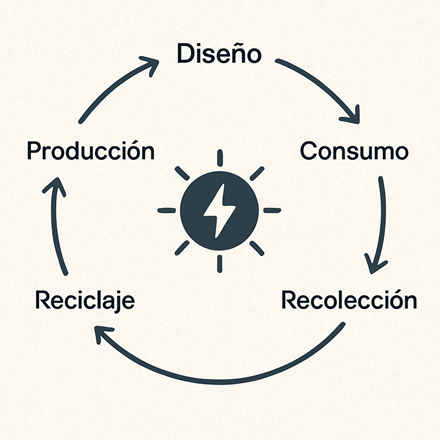
The circular economy of plastics is a model of production and consumption that involves sharing, leasing, reusing, repairing, refurbishing, and recycling existing plastic materials and products for as long as possible. Unlike the traditional linear model, the circular economy seeks to close material life cycles, eliminating the concept of "waste" and turning it into a resource.
This systemic approach is based on three fundamental principles:
- Eliminate waste and pollution by design: Products and systems are designed to prevent waste generation from the outset, through intelligent material selection and production process optimization.
- Keep products and materials in use: The useful life of materials is extended through reuse, repair, remanufacture, and recycling, preventing them from becoming premature waste.
- Regenerate natural systems: Rather than simply minimizing environmental damage, the circular economy seeks to restore and improve natural systems, incorporating renewable energy use and selection of biodegradable materials.
From Linear to Circular: A Necessary Transformation
The linear model has been the norm in the plastics industry for over a century: raw materials are extracted, transformed into products, and at the end of their useful life, discarded. This approach has generated a global plastic waste crisis of alarming proportions.
The transition toward the circular economy is not just an environmental issue: it is a strategic economic opportunity. The benefits are multiple and tangible:
| Benefit | Impact | Level |
|---|---|---|
| Waste reduction | Less plastic in landfills, incinerators, and natural environments | High |
| Lower dependence on virgin resources | Conservation of finite raw materials like petroleum | High |
| GHG emission reduction | Production with recycled and biodegradable materials requires less energy | Medium-High |
| Innovation and new businesses | Sustainable design, reverse logistics, recycling facilities | High |
| Competitive advantage | Responsible companies attract conscious consumers and investors | High |
The Ellen MacArthur Foundation, established in 2010, is today the main global driver of the circular economy, working with companies, governments, and academia to accelerate this transition.
Brief History: From Bioplastics to Circular Economy
Circular economy concepts have roots in multiple intellectual traditions. Walter Stahel proposed the "performance economy" in 1976, and William McDonough and Michael Braungart developed the Cradle to Cradle methodology in 2002, direct inspiration for the current circular movement.
Regarding bioplastics, their history begins with the commercialization of cellulose-based cellophane in 1926. However, petrochemical-based plastics dominated the twentieth century due to their low cost and versatility. At the end of the twentieth century and the beginning of the twenty-first, interest in sustainability drove the resurgence of bioplastics.
Polylactic Acid (PLA), a semi-crystalline thermoplastic derived from corn starch or sugarcane, was widely commercialized in the early 2000s, marking the beginning of modern biopolymer development. Today, materials such as PHA (Polyhydroxyalkanoates), produced by bacteria, represent the next frontier of innovation in sustainable materials.
GEA Biodegradables: Innovative Solutions for Sustainable Molding
GEA Biodegradables is a company specializing in the development and commercialization of additives and compounds that improve the sustainability of plastics, with particular focus on biodegradation. Their product portfolio is designed to integrate seamlessly into existing injection molding processes, without requiring drastic changes in machinery or processes.
Eco One®: Anaerobic Biodegradation for Conventional Plastics
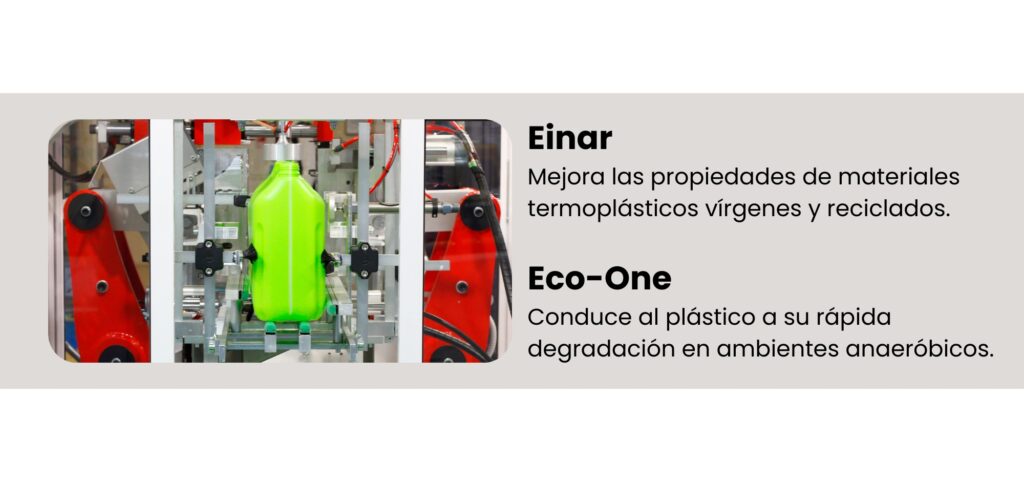
Eco One® is GEA Biodegradables' flagship product: a masterbatch (additive concentrate) incorporated into conventional plastics such as Polyethylene (PE), Polypropylene (PP), or Polystyrene (PS), enabling their anaerobic biodegradation at end of life.
The key innovation of Eco One® lies in the fact that it fully maintains the mechanical properties and recyclability of the plastic during its service life. Biodegradation only occurs in anaerobic environments (such as landfills), where microorganisms consume the material within 1 to 5 years, safely reintegrating into nature.
Technical advantages of Eco One® for the molder:
- Compatibility with polyethylene, polypropylene, polystyrene, and other common resins
- No changes to process parameters or existing machinery required
- Mechanical properties maintained throughout the product's useful life
- Verifiable biodegradation certifications
- Reduced environmental impact without compromising product performance
Nanomaster®: Property Enhancement with Recycled Materials
Nanomaster® is an advanced additive that improves the mechanical and barrier properties of plastics, even when recycled materials are used. This product addresses one of the main challenges of recycling: the property degradation that occurs in each reprocessing cycle.
By improving the properties of recycled materials, Nanomaster® enables:
- Higher percentage of recycled material in the formulation without sacrificing quality
- Reduction in virgin raw material demand, conserving natural resources
- Extension of useful life of products manufactured with recycled content
- Direct support for the circular economy by closing material life cycles
Einar® 201: Plant-Based Processing Agent
Einar® 201 from Palsgaard is a plant-based processing agent that reduces cycle times in injection molding and improves material dispersion, while reducing dependence on petroleum-derived additives.
For the molder, this translates to:
- Shorter cycles and higher productivity per machine
- Better surface quality of molded parts
- Lower consumption of petrochemical additives
- More efficient processing of bioplastics and recycled materials
- Contribution to the reduced carbon footprint of operations
How to Implement Circular Economy in Your Molding Plant
The transition toward circular practices in an injection molding plant does not require an immediate revolution. It can be implemented progressively following these steps:
1. Audit of current materials and processes
Identify which resins you use, what percentage of reject material you generate, and what recycling or biodegradation options exist for your current products.
2. Incorporation of biodegradable additives
Start with masterbatches like Eco One® in your current resins. Without changes to machinery, you reduce the end-of-life environmental impact of your products.
3. Increase in recycled content
Use Nanomaster® to increase the percentage of recycled material (R-PET, R-PP, R-HDPE) in your formulations without sacrificing mechanical properties.
4. Process optimization with plant-based agents
Incorporate Einar® 201 to reduce cycle times and improve processing efficiency of sustainable materials.
5. Design for circularity
In new projects, design parts with recyclability in mind: minimize the number of different materials, avoid non-separable metal inserts, and select resins compatible with existing recycling streams.
6. Certification and communication
Obtain sustainability certifications and actively communicate your circular practices to customers and investors.
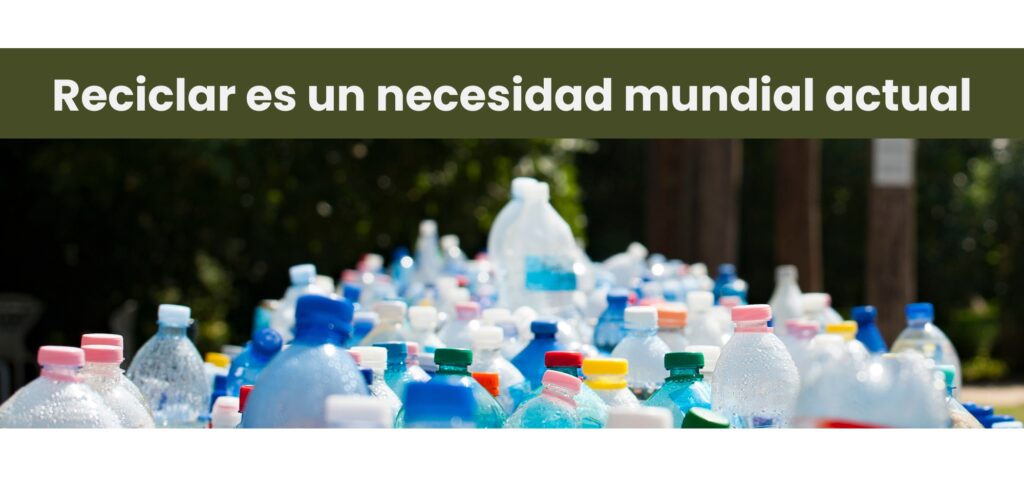
Economic and Environmental Benefits of Circular Economy in Molding
Adopting circular economy practices in the molding industry is not only ethically correct: it is economically smart.
Direct economic benefits:
- Raw material cost reduction through greater use of recycled content
- Energy savings in processes optimized with plant-based processing agents
- Market differentiation with products certified as sustainable
- Access to new customers who demand sustainability in their supply chain
- Early compliance with increasingly strict environmental regulations
- Reduction in scrap rates through internal recycling of rejects
Measurable environmental impact:
- Reduction of plastics in landfills and oceans
- Lower carbon footprint per unit produced
- Conservation of oil and gas reserves
- Restoration of natural ecosystems through responsible biodegradation
Challenges and Solutions in Bioplastic Processing
Bioplastic molding presents specific technical challenges that must be addressed with knowledge and preparation:
Variation in thermal properties Some bioplastics exhibit narrower processing ranges or different melting points. The solution is precise temperature control in barrel and mold, with continuous monitoring.
High hygroscopicity Many natural-sourced bioplastics are highly hygroscopic. PLA, for example, requires exhaustive drying before processing to prevent hydrolytic degradation. Desiccant drying systems are indispensable.
Melt viscosity Differences in melt viscosity affect the injection pressures and velocities needed for proper filling. This requires case-by-case process parameter adjustment.
Material cost Currently, bioplastics typically cost more than their conventional counterparts. However, ongoing research and increased production are progressively reducing this gap.
The key lies in deep material analysis, fine-tuning of molding parameters, and intelligent use of additives like those from GEA Biodegradables to optimize processing.
Trends and Future of the Bioplastics and Circular Economy Market
The global bioplastics and circular economy market for plastics is experiencing accelerated growth, driven by multiple forces:
- Government regulations becoming increasingly strict in Europe, America, and Asia regarding single-use plastics and mandatory recycled content
- Consumer pressure demanding responsible products and brands
- Corporate commitments from major brands toward 100% sustainable packaging
- Technological innovation in new biopolymers with better properties and reduced costs
- Economies of scale in bioplastic production that progressively reduce costs
The future of plastics does not lie in their elimination, but in their reinvention. The convergence of circular economy principles, bioplastic innovation, and GEA Biodegradables advanced additives represents the path toward a truly sustainable plastics industry.
Companies that embrace this vision today will have a significant competitive advantage in the market that is taking shape for the coming years.
Conclusion
The circular economy of plastics is not a passing trend: it is the new reality of the injection molding industry. GEA Biodegradables' innovative additives — Eco One®, Nanomaster®, and Einar® 201 — offer practical and accessible solutions for molders to transition toward more sustainable practices without sacrificing performance or competitiveness.
The transition requires technical knowledge, willingness to innovate, and reliable partners. With the right tools, the molding industry can become a protagonist of the shift toward a truly circular economy.
Join MoldingHub: The Global Community for Sustainable Molding
Are you implementing circular economy practices in your molding plant? Do you have experience with bioplastics or biodegradable additives like those from GEA Biodegradables?
MoldingHub is the global professional social network for the injection molding industry. Connect with engineers, technicians, companies, and suppliers from around the world who are leading the transition toward sustainable molding.
- Share your experiences with bioplastics and circular economy
- Learn from the best specialists in sustainable molding
- Discover suppliers of biodegradable additives and recycled materials
- Participate in discussions about the future of plastics in the industry
Join MoldingHub for free and become part of the community reinventing injection molding.